Time Tracking Your Team Will Actually Use
2 minutes a day, built into the standup they're already doing. Capture tasks now, adjust hours later. No more "please update your timesheets" emails.
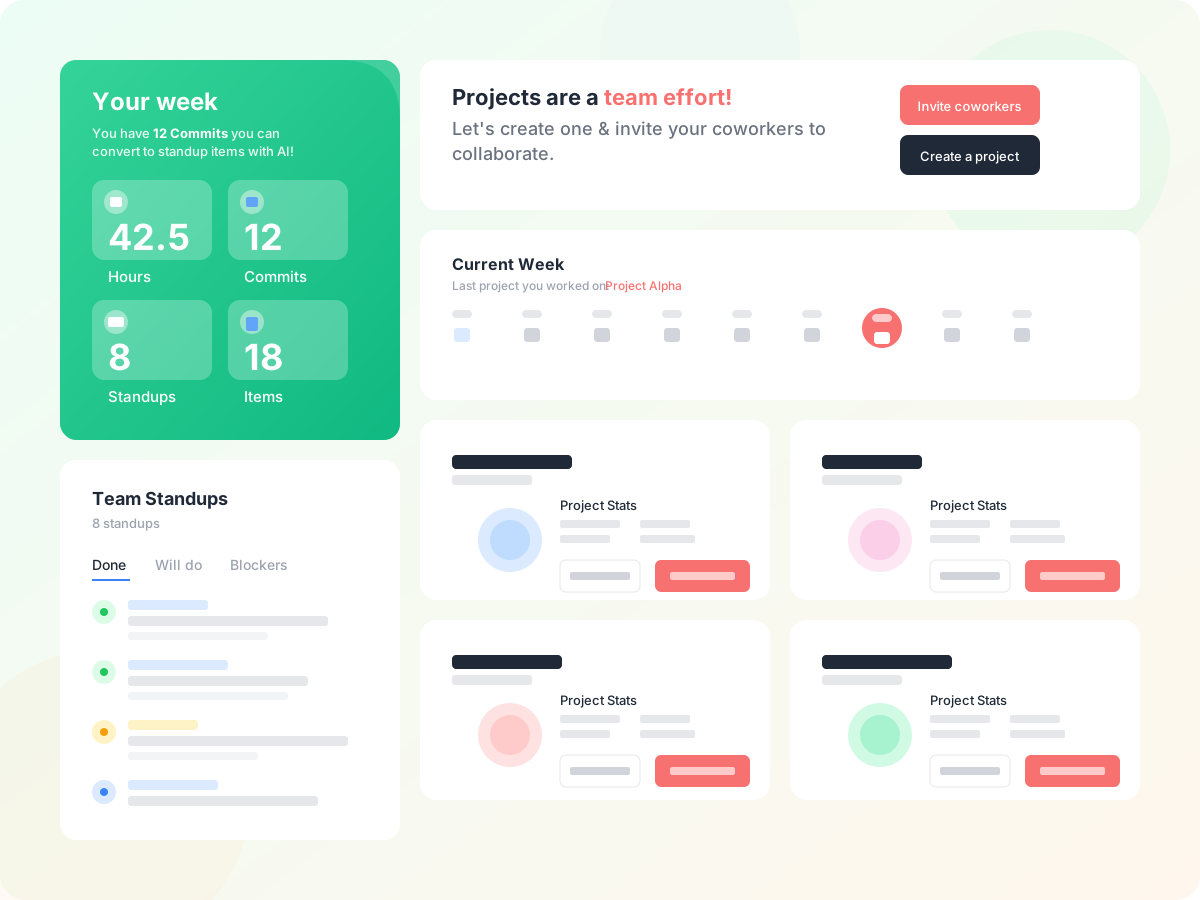
The story so far
You've tried Harvest. Or Toggl. Or the time tracking built into ClickUp or Jira.
It works for a week. Maybe two. Then compliance drops off. People forget. They submit incomplete entries. They stop using it entirely.
You send the weekly email: "Can everyone please update their timesheets?" It doesn't help. You become the timesheet police. Your team resents you for it.
This isn't a discipline problem. It's a design problem. Every traditional time tracking tool makes the same fundamental mistake: they ask people to remember what they did AND how long it took—often days later, when they've forgotten both. It's two hard problems at once.
2 weeks
Average time before traditional time tracking adoption drops off
2 weeks
Average time before traditional time tracking adoption drops off
2 weeks
Average time before traditional time tracking adoption drops off
40-60%
Typical compliance rate after the "honeymoon period" ends
40-60%
Typical compliance rate after the "honeymoon period" ends
40-60%
Typical compliance rate after the "honeymoon period" ends
2 minutes
Daily investment with Agency Standup's async approach
2 minutes
Daily investment with Agency Standup's async approach
2 minutes
Daily investment with Agency Standup's async approach
Designed for adoption, not just functionality
Every feature built around one question: will the team actually use this? Here's what makes the difference.
2-Minute Daily Form
What I did, what I'll do, blockers. The standup format engineers already know. No new process to learn—just a better place for information they're already sharing.
2-Minute Daily Form
What I did, what I'll do, blockers. The standup format engineers already know. No new process to learn—just a better place for information they're already sharing.
2-Minute Daily Form
What I did, what I'll do, blockers. The standup format engineers already know. No new process to learn—just a better place for information they're already sharing.
Async Hour Adjustment
Tasks captured during standup when memory is fresh. Hours refined anytime—end of day, end of week, whenever convenient. No remembering what you did.
Async Hour Adjustment
Tasks captured during standup when memory is fresh. Hours refined anytime—end of day, end of week, whenever convenient. No remembering what you did.
Async Hour Adjustment
Tasks captured during standup when memory is fresh. Hours refined anytime—end of day, end of week, whenever convenient. No remembering what you did.
GitHub Integration
Commits become standup entries automatically. Ship code at 3pm, entry created. Merge a PR, entry created. Your code becomes your timesheet.
GitHub Integration
Commits become standup entries automatically. Ship code at 3pm, entry created. Merge a PR, entry created. Your code becomes your timesheet.
GitHub Integration
Commits become standup entries automatically. Ship code at 3pm, entry created. Merge a PR, entry created. Your code becomes your timesheet.
Pinned Items
Working on something that spans multiple days? Pin it so it appears in tomorrow's standup automatically. No re-entering the same task daily.
Pinned Items
Working on something that spans multiple days? Pin it so it appears in tomorrow's standup automatically. No re-entering the same task daily.
Pinned Items
Working on something that spans multiple days? Pin it so it appears in tomorrow's standup automatically. No re-entering the same task daily.
Team Dashboard
See who's logged at a glance. Gentle accountability without micromanagement. Address patterns, not individual entries. Stop being the timesheet police.
Team Dashboard
See who's logged at a glance. Gentle accountability without micromanagement. Address patterns, not individual entries. Stop being the timesheet police.
Team Dashboard
See who's logged at a glance. Gentle accountability without micromanagement. Address patterns, not individual entries. Stop being the timesheet police.
Calendar Pre-Population
Connect Google Calendar. Meetings appear automatically in your standup. One less thing to remember. Fewer gaps in your timesheet.
Calendar Pre-Population
Connect Google Calendar. Meetings appear automatically in your standup. One less thing to remember. Fewer gaps in your timesheet.
Calendar Pre-Population
Connect Google Calendar. Meetings appear automatically in your standup. One less thing to remember. Fewer gaps in your timesheet.
Separate the hard part from the easy part
Traditional time tracking fails because it asks two hard questions at the worst possible time. We fixed that.
Why engineers hate time tracking (it's not laziness)
Traditional time tracking asks engineers to: stop what they're doing, open a separate app, remember what they worked on (often days ago), estimate how long each thing took, and categorize it into vague buckets.
Each step is friction. Each step is a context switch. Each step is a reason to skip it.
And the worst part? The data they enter is wrong anyway—because they're guessing at both WHAT they did AND HOW LONG it took, long after they've forgotten both.
Capture WHAT now, adjust HOW LONG later
Time tracking has two components: WHAT you worked on (hard to remember later) and HOW LONG it took (easy to estimate if you know what you did).
Agency Standup captures the WHAT during standup—when memory is fresh. Those tasks immediately appear on the timesheet. The hard part is done in 2 minutes.
The HOW LONG can be adjusted anytime—end of day, end of week. You're not reconstructing from memory. The tasks are already there. You're just updating duration.

Built on habits your team already has
No new process to adopt. No new habit to form. Just a better place for information they're already sharing every day.
They're already doing standups—we just capture them
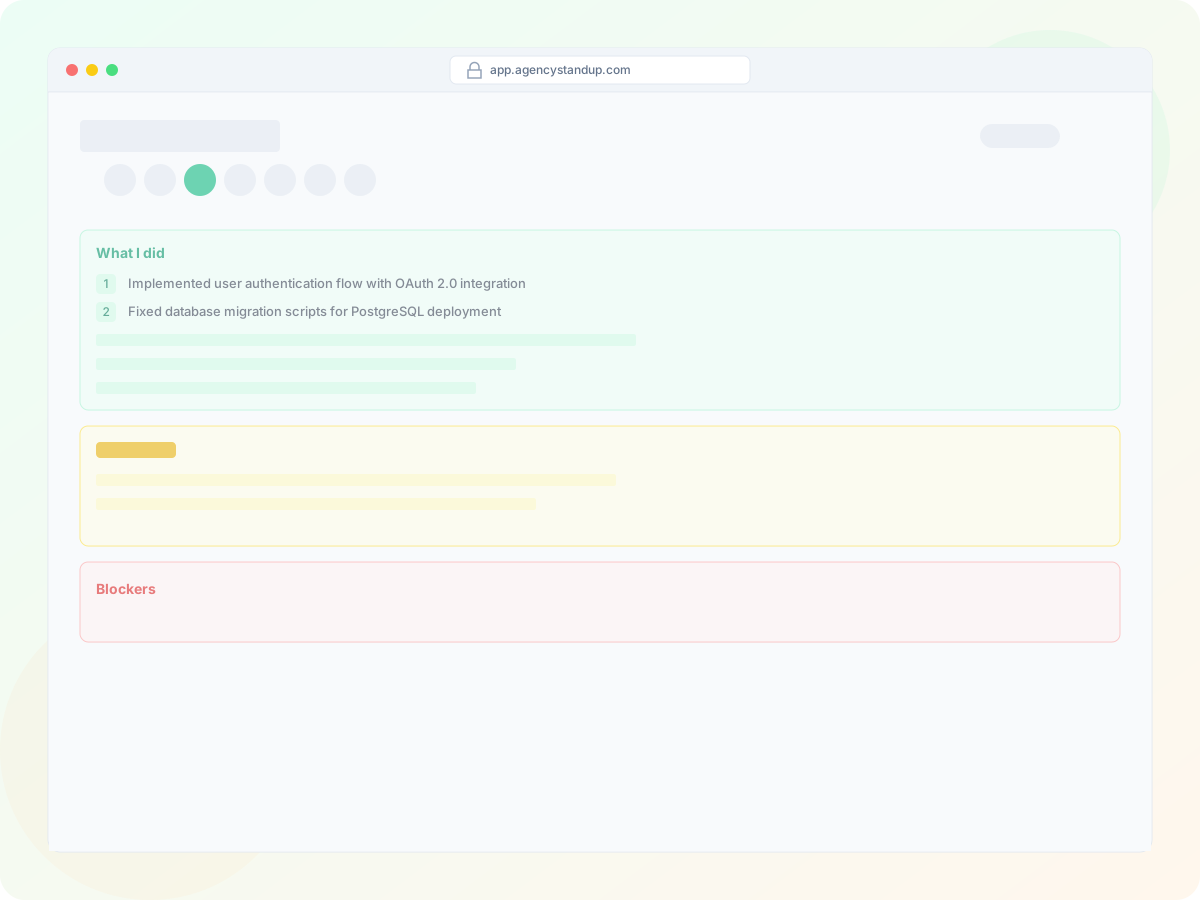
Most engineering teams already do daily standups. Maybe in a meeting. Maybe async in Slack. They're already answering "what did I do yesterday?" every single day. Agency Standup just captures that answer somewhere useful—instead of letting it disappear into a Slack thread nobody will ever read again. There's no new habit to form. Same 2-minute investment, dramatically more useful output.
They're already doing standups—we just capture them
Most engineering teams already do daily standups. Maybe in a meeting. Maybe async in Slack. They're already answering "what did I do yesterday?" every single day. Agency Standup just captures that answer somewhere useful—instead of letting it disappear into a Slack thread nobody will ever read again. There's no new habit to form. Same 2-minute investment, dramatically more useful output.
They're already doing standups—we just capture them
Most engineering teams already do daily standups. Maybe in a meeting. Maybe async in Slack. They're already answering "what did I do yesterday?" every single day. Agency Standup just captures that answer somewhere useful—instead of letting it disappear into a Slack thread nobody will ever read again. There's no new habit to form. Same 2-minute investment, dramatically more useful output.
GitHub Auto-Capture
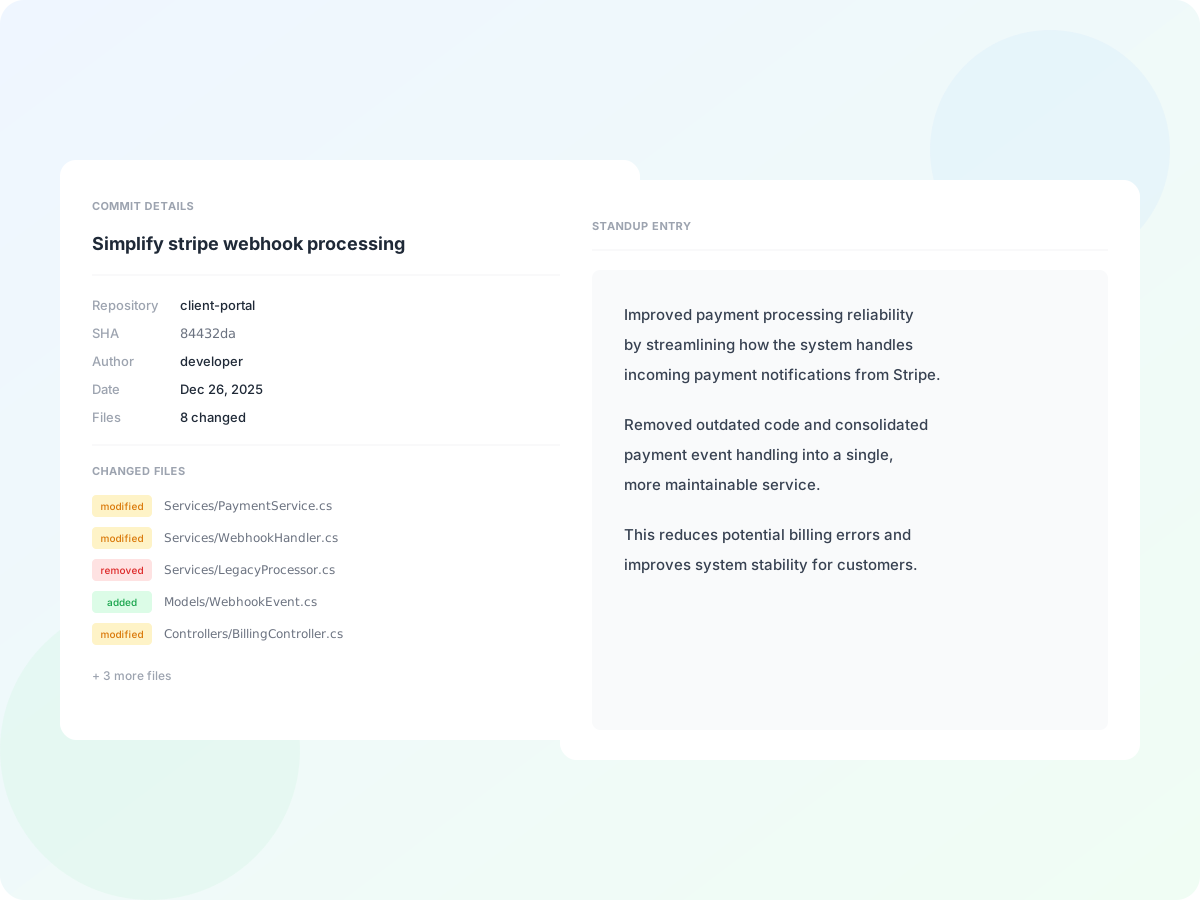
Connect your repositories. Commits become standup entries automatically. Ship code at 3pm, entry created. Your team doesn't have to remember what they shipped—the code remembers for them.
GitHub Auto-Capture
Connect your repositories. Commits become standup entries automatically. Ship code at 3pm, entry created. Your team doesn't have to remember what they shipped—the code remembers for them.
GitHub Auto-Capture
Connect your repositories. Commits become standup entries automatically. Ship code at 3pm, entry created. Your team doesn't have to remember what they shipped—the code remembers for them.
Gentle Accountability
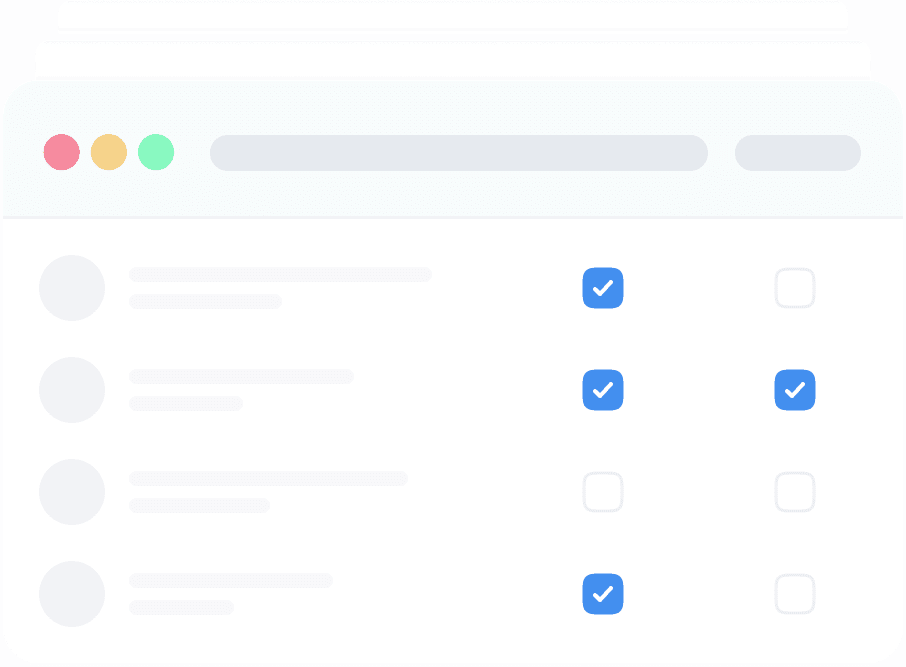
The team dashboard shows who's logged and who hasn't. At a glance. No more chasing individuals. Team members see their own status. Managers see the team. Accountability without micromanagement.
Gentle Accountability
The team dashboard shows who's logged and who hasn't. At a glance. No more chasing individuals. Team members see their own status. Managers see the team. Accountability without micromanagement.
Gentle Accountability
The team dashboard shows who's logged and who hasn't. At a glance. No more chasing individuals. Team members see their own status. Managers see the team. Accountability without micromanagement.
Pinned Items
Working on something that spans multiple days? Pin it. It appears in tomorrow's standup automatically. No re-entering the same task. Multi-day projects stay visible until you unpin them.
Pinned Items
Working on something that spans multiple days? Pin it. It appears in tomorrow's standup automatically. No re-entering the same task. Multi-day projects stay visible until you unpin them.
Pinned Items
Working on something that spans multiple days? Pin it. It appears in tomorrow's standup automatically. No re-entering the same task. Multi-day projects stay visible until you unpin them.
Calendar Integration
Connect Google Calendar. Meetings, calls, and appointments appear automatically in your standup. One less thing to remember. Fewer gaps in your timesheet.
Calendar Integration
Connect Google Calendar. Meetings, calls, and appointments appear automatically in your standup. One less thing to remember. Fewer gaps in your timesheet.
Calendar Integration
Connect Google Calendar. Meetings, calls, and appointments appear automatically in your standup. One less thing to remember. Fewer gaps in your timesheet.
Three steps to time tracking that actually gets done
Capture what during standup. Adjust how long whenever. No reconstruction. No forgetting. No chasing.
Log your standup (2 minutes)
Every morning, your team logs what they did yesterday. It's the standup report they're probably already doing—we just capture it. What I did, what I'll do, blockers. Those tasks immediately appear on the timesheet. The hard part—remembering what you worked on—is done.
Log your standup (2 minutes)
Every morning, your team logs what they did yesterday. It's the standup report they're probably already doing—we just capture it. What I did, what I'll do, blockers. Those tasks immediately appear on the timesheet. The hard part—remembering what you worked on—is done.
Log your standup (2 minutes)
Every morning, your team logs what they did yesterday. It's the standup report they're probably already doing—we just capture it. What I did, what I'll do, blockers. Those tasks immediately appear on the timesheet. The hard part—remembering what you worked on—is done.
Have your standup, do your work
Go about your day. Don't think about time tracking. Your tasks are on the timesheet. They're not going anywhere. Focus on the work, not the tracking.
Have your standup, do your work
Go about your day. Don't think about time tracking. Your tasks are on the timesheet. They're not going anywhere. Focus on the work, not the tracking.
Have your standup, do your work
Go about your day. Don't think about time tracking. Your tasks are on the timesheet. They're not going anywhere. Focus on the work, not the tracking.
Adjust hours whenever
End of day. End of week. Whenever you have a moment. Come back and refine the hours on tasks that are already captured. No reconstruction. No remembering. The tasks are there. You're just updating duration.
Adjust hours whenever
End of day. End of week. Whenever you have a moment. Come back and refine the hours on tasks that are already captured. No reconstruction. No remembering. The tasks are there. You're just updating duration.
Adjust hours whenever
End of day. End of week. Whenever you have a moment. Come back and refine the hours on tasks that are already captured. No reconstruction. No remembering. The tasks are there. You're just updating duration.
Why this approach actually gets adopted
It's not about features. It's about cognitive load. We reduced the hard parts and made timing flexible.
1 question
Asked during standup: "What did I do yesterday?"
Traditional time tracking asks two hard questions at once: what did you do AND how long did it take? Days later, both answers are guesses. Agency Standup only asks "what did you do?" during standup when memory is fresh. The hours question is separate—and much easier.
Anytime
Hours can be adjusted—not during standup, whenever convenient
The hard part (remembering what you did) happens in 2 minutes during standup. The easy part (adjusting hours) can happen whenever: end of day, end of week, between meetings. You're not reconstructing—the tasks are already there.
Existing habit
Built on standups your team already does
No new habit to form. No new process to adopt. Most teams already answer "what did I do yesterday?" every day. Agency Standup just captures that answer somewhere useful. Same 2-minute investment. Dramatically more useful output.
1 question
Asked during standup: "What did I do yesterday?"
Traditional time tracking asks two hard questions at once: what did you do AND how long did it take? Days later, both answers are guesses. Agency Standup only asks "what did you do?" during standup when memory is fresh. The hours question is separate—and much easier.
Anytime
Hours can be adjusted—not during standup, whenever convenient
The hard part (remembering what you did) happens in 2 minutes during standup. The easy part (adjusting hours) can happen whenever: end of day, end of week, between meetings. You're not reconstructing—the tasks are already there.
Existing habit
Built on standups your team already does
No new habit to form. No new process to adopt. Most teams already answer "what did I do yesterday?" every day. Agency Standup just captures that answer somewhere useful. Same 2-minute investment. Dramatically more useful output.
1 question
Asked during standup: "What did I do yesterday?"
Traditional time tracking asks two hard questions at once: what did you do AND how long did it take? Days later, both answers are guesses. Agency Standup only asks "what did you do?" during standup when memory is fresh. The hours question is separate—and much easier.
Anytime
Hours can be adjusted—not during standup, whenever convenient
The hard part (remembering what you did) happens in 2 minutes during standup. The easy part (adjusting hours) can happen whenever: end of day, end of week, between meetings. You're not reconstructing—the tasks are already there.
Existing habit
Built on standups your team already does
No new habit to form. No new process to adopt. Most teams already answer "what did I do yesterday?" every day. Agency Standup just captures that answer somewhere useful. Same 2-minute investment. Dramatically more useful output.
1 question
Asked during standup: "What did I do yesterday?"
Traditional time tracking asks two hard questions at once: what did you do AND how long did it take? Days later, both answers are guesses. Agency Standup only asks "what did you do?" during standup when memory is fresh. The hours question is separate—and much easier.
Anytime
Hours can be adjusted—not during standup, whenever convenient
The hard part (remembering what you did) happens in 2 minutes during standup. The easy part (adjusting hours) can happen whenever: end of day, end of week, between meetings. You're not reconstructing—the tasks are already there.
Existing habit
Built on standups your team already does
No new habit to form. No new process to adopt. Most teams already answer "what did I do yesterday?" every day. Agency Standup just captures that answer somewhere useful. Same 2-minute investment. Dramatically more useful output.
1 question
Asked during standup: "What did I do yesterday?"
Traditional time tracking asks two hard questions at once: what did you do AND how long did it take? Days later, both answers are guesses. Agency Standup only asks "what did you do?" during standup when memory is fresh. The hours question is separate—and much easier.
Anytime
Hours can be adjusted—not during standup, whenever convenient
The hard part (remembering what you did) happens in 2 minutes during standup. The easy part (adjusting hours) can happen whenever: end of day, end of week, between meetings. You're not reconstructing—the tasks are already there.
Existing habit
Built on standups your team already does
No new habit to form. No new process to adopt. Most teams already answer "what did I do yesterday?" every day. Agency Standup just captures that answer somewhere useful. Same 2-minute investment. Dramatically more useful output.
1 question
Asked during standup: "What did I do yesterday?"
Traditional time tracking asks two hard questions at once: what did you do AND how long did it take? Days later, both answers are guesses. Agency Standup only asks "what did you do?" during standup when memory is fresh. The hours question is separate—and much easier.
Anytime
Hours can be adjusted—not during standup, whenever convenient
The hard part (remembering what you did) happens in 2 minutes during standup. The easy part (adjusting hours) can happen whenever: end of day, end of week, between meetings. You're not reconstructing—the tasks are already there.
Existing habit
Built on standups your team already does
No new habit to form. No new process to adopt. Most teams already answer "what did I do yesterday?" every day. Agency Standup just captures that answer somewhere useful. Same 2-minute investment. Dramatically more useful output.
1 question
Asked during standup: "What did I do yesterday?"
Traditional time tracking asks two hard questions at once: what did you do AND how long did it take? Days later, both answers are guesses. Agency Standup only asks "what did you do?" during standup when memory is fresh. The hours question is separate—and much easier.
Anytime
Hours can be adjusted—not during standup, whenever convenient
The hard part (remembering what you did) happens in 2 minutes during standup. The easy part (adjusting hours) can happen whenever: end of day, end of week, between meetings. You're not reconstructing—the tasks are already there.
Existing habit
Built on standups your team already does
No new habit to form. No new process to adopt. Most teams already answer "what did I do yesterday?" every day. Agency Standup just captures that answer somewhere useful. Same 2-minute investment. Dramatically more useful output.
1 question
Asked during standup: "What did I do yesterday?"
Traditional time tracking asks two hard questions at once: what did you do AND how long did it take? Days later, both answers are guesses. Agency Standup only asks "what did you do?" during standup when memory is fresh. The hours question is separate—and much easier.
Anytime
Hours can be adjusted—not during standup, whenever convenient
The hard part (remembering what you did) happens in 2 minutes during standup. The easy part (adjusting hours) can happen whenever: end of day, end of week, between meetings. You're not reconstructing—the tasks are already there.
Existing habit
Built on standups your team already does
No new habit to form. No new process to adopt. Most teams already answer "what did I do yesterday?" every day. Agency Standup just captures that answer somewhere useful. Same 2-minute investment. Dramatically more useful output.
1 question
Asked during standup: "What did I do yesterday?"
Traditional time tracking asks two hard questions at once: what did you do AND how long did it take? Days later, both answers are guesses. Agency Standup only asks "what did you do?" during standup when memory is fresh. The hours question is separate—and much easier.
Anytime
Hours can be adjusted—not during standup, whenever convenient
The hard part (remembering what you did) happens in 2 minutes during standup. The easy part (adjusting hours) can happen whenever: end of day, end of week, between meetings. You're not reconstructing—the tasks are already there.
Existing habit
Built on standups your team already does
No new habit to form. No new process to adopt. Most teams already answer "what did I do yesterday?" every day. Agency Standup just captures that answer somewhere useful. Same 2-minute investment. Dramatically more useful output.
1 question
Asked during standup: "What did I do yesterday?"
Traditional time tracking asks two hard questions at once: what did you do AND how long did it take? Days later, both answers are guesses. Agency Standup only asks "what did you do?" during standup when memory is fresh. The hours question is separate—and much easier.
Anytime
Hours can be adjusted—not during standup, whenever convenient
The hard part (remembering what you did) happens in 2 minutes during standup. The easy part (adjusting hours) can happen whenever: end of day, end of week, between meetings. You're not reconstructing—the tasks are already there.
Existing habit
Built on standups your team already does
No new habit to form. No new process to adopt. Most teams already answer "what did I do yesterday?" every day. Agency Standup just captures that answer somewhere useful. Same 2-minute investment. Dramatically more useful output.
1 question
Asked during standup: "What did I do yesterday?"
Traditional time tracking asks two hard questions at once: what did you do AND how long did it take? Days later, both answers are guesses. Agency Standup only asks "what did you do?" during standup when memory is fresh. The hours question is separate—and much easier.
Anytime
Hours can be adjusted—not during standup, whenever convenient
The hard part (remembering what you did) happens in 2 minutes during standup. The easy part (adjusting hours) can happen whenever: end of day, end of week, between meetings. You're not reconstructing—the tasks are already there.
Existing habit
Built on standups your team already does
No new habit to form. No new process to adopt. Most teams already answer "what did I do yesterday?" every day. Agency Standup just captures that answer somewhere useful. Same 2-minute investment. Dramatically more useful output.
1 question
Asked during standup: "What did I do yesterday?"
Traditional time tracking asks two hard questions at once: what did you do AND how long did it take? Days later, both answers are guesses. Agency Standup only asks "what did you do?" during standup when memory is fresh. The hours question is separate—and much easier.
Anytime
Hours can be adjusted—not during standup, whenever convenient
The hard part (remembering what you did) happens in 2 minutes during standup. The easy part (adjusting hours) can happen whenever: end of day, end of week, between meetings. You're not reconstructing—the tasks are already there.
Existing habit
Built on standups your team already does
No new habit to form. No new process to adopt. Most teams already answer "what did I do yesterday?" every day. Agency Standup just captures that answer somewhere useful. Same 2-minute investment. Dramatically more useful output.

Ready to stop reconstructing timesheets?
Start your 14-day free trial. No credit card required.
Ready to stop reconstructing timesheets?
Start your 14-day free trial. No credit card required.
Ready to stop reconstructing timesheets?
Start your 14-day free trial. No credit card required.